About the Journal
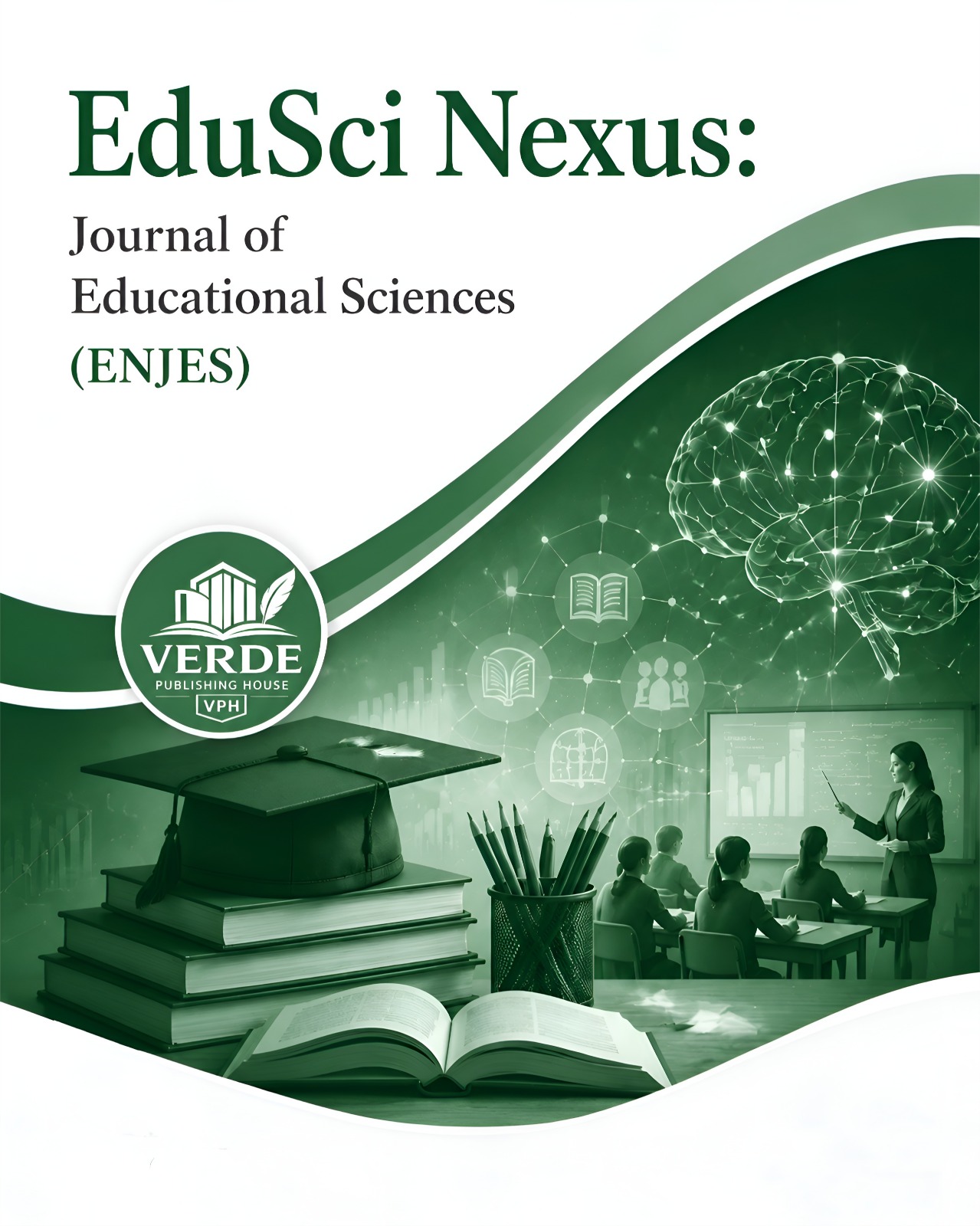
EduSci Nexus: Journal of Educational Sciences (ENJES) is an international, peer-reviewed, open-access academic journal dedicated to advancing research and scholarly dialogue in the field of Educational Sciences. The journal aspires to be indexed in Scopus and other reputable international databases, adhering to the highest standards of academic publishing, research integrity, and global visibility.
ENJES provides a dynamic platform for researchers, academics, policymakers, and practitioners to publish innovative theoretical, empirical, and interdisciplinary studies that contribute to the development of education at local, regional, and international levels.
Aims and Scope
The journal aims to:
- Promote high-quality research in Educational Sciences.
- Encourage interdisciplinary approaches linking education with psychology, technology, sociology, and management.
- Support evidence-based educational reforms and innovations.
- Enhance international collaboration among scholars.
Scope includes (but is not limited to):
- Curriculum and Instruction
- Educational Psychology
- Educational Technology and E-Learning
- Assessment and Evaluation
- Educational Leadership and Management
- Teacher Education and Professional Development
- Special Education
- Higher Education Studies
- STEM Education
- Early Childhood Education
- Comparative and International Education
Publication Model
- Frequency: Quarterly (4 issues per year)
- Language: English
- Peer Review: Double-blind peer review
- Access Model: Open Access
- Article Types: Original Research Articles, Review Articles, Theoretical Papers, Case Studies, Short Communications, Book Reviews
Quality Standards
ENJES follows international publishing ethics standards in accordance with:
- COPE (Committee on Publication Ethics)
- DOAJ Principles of Transparency
- Scopus Content Selection & Advisory Board (CSAB) criteria
The journal ensures:
- Rigorous peer-review process
- Plagiarism screening
- DOI assignment for all published articles
- Digital archiving and long-term preservation
- Transparent editorial policies
Editorial Structure
The journal is governed by:
- Editor-in-Chief
- Associate Editors
- International Editorial Board
- Scientific Advisory Board
Board members represent diverse academic institutions and research backgrounds to ensure global representation and scholarly excellence.
Target Audience
- University researchers and faculty members
- Educational policymakers
- Graduate students
- Educational consultants and practitioners
- Research institutions
Indexing and Abstracting (Planned)
The journal seeks inclusion in:
- Scopus
- DOAJ
- EBSCO
- ERIC
- Google Scholar
- CrossRef
Vision
To become a leading international journal in Educational Sciences recognized for academic rigor, innovation, and meaningful contributions to global education development.